John Bunyan

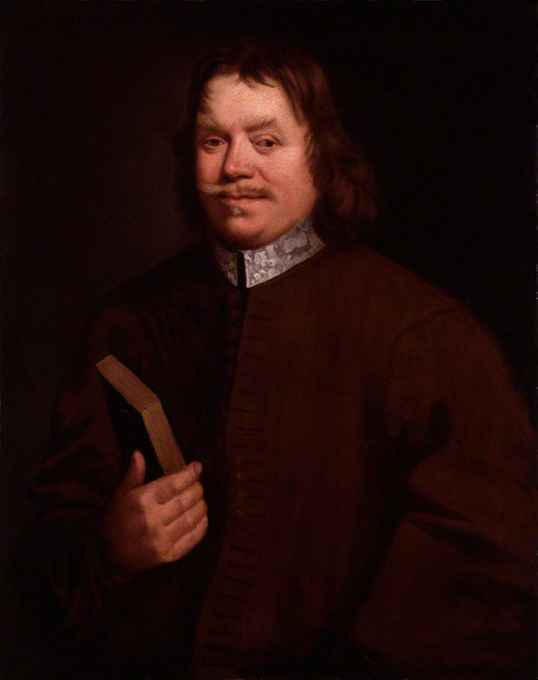
“I saw moreover that it was not my good frame of heart that made my righteousness better, nor from my bad frame that made my righteousness worse; for my righteousness was Jesus Christ himself, "the same yesterday, today and forever."
Those words were written by a fascinating man named John Bunyan. No. He was not Paul’s brother! But, he did live a hard life of faithfulness and devotion to Jesus.
Most know John Bunyan as the author of The Pilgrim's Progress, one of the most influential Christian books ever written. Yet Bunyan never set out to become a famous author. His greatest desire was much simpler: to know Jesus Christ, love Him deeply, and faithfully tell others about Him.
John Bunyan was born in England in 1628, just 111 years after Martin Luther nailed his 95 theses to the Wittenburg door. His life included a period of great turbulence in both England and Europe. The English Civil War dragged Bunyan into service. In Germany, the 30 years war ravaged the whole region. The war was rooted in conflicts between the Catholic church and the emerging protestant movement. Meanwhile, France was seeing great persecution of Protestant believers by Cardinal Richelieu and the French army.
As a young man, however, he had little interest in God.
Everything began to change when he got married. Most of us can identify with that! His wife inherited two books from her father. She and John had very few possessions, other than these books.
The books were:
- The Plain Man's Pathway to Heaven (1601), written by a Puritan minister, Arthur Dent. It was written as a dialogue explaining the gospel, repentance, faith, and the Christian life in language ordinary people could understand.
- The Practice of Piety (1612), Lewis Bayly, Bishop of Bangor. A practical guide to living a godly life through prayer, Scripture reading, worship, and holy conduct. It became an international bestseller of its day and was translated into many languages.
As Bunyan read them, he began to wonder if he truly knew God.
Bunyan's spiritual journey was slow. He struggled with guilt, fear, and doubts about his salvation. He wondered if someone with his sinful past could ever be forgiven. As he read the Scriptures, God showed him that salvation is not earned by good works but received through faith in Jesus Christ alone.
That discovery changed everything.
Once Bunyan understood God's grace, his life became centered on Christ. He immersed himself in the Bible, not simply to gain knowledge, but because he wanted to know the Lord more deeply. Those who knew him often said that he seemed to "bleed Scripture." God's Word shaped his thinking, guided his decisions, and filled his preaching.
Although he had little formal education, Bunyan became a gifted preacher. Crowds gathered to hear him because he spoke plainly, passionately from the Bible. He wasn't interested in impressing people with fancy words. He wanted them to meet the Savior who had transformed his own life.
Then came the greatest test of his faith.
In 1660, England passed laws that made it illegal for many pastors to preach unless they were approved by the government! Can you imagine that? Bunyan was arrested and told he must stop preaching.
He refused.
He spent about twelve years in prison. Bunyan later wrote that leaving his family behind felt like "pulling the flesh from my bones." Yet he believed that obeying Christ was worth every sacrifice.
However, prison did not silence him. It was there that he wrote The Pilgrim's Progress.
The story follows a man named Christian as he journeys from the City of Destruction to the Celestial City. Along the way, he faces temptation, discouragement, fear, and hardship—but Christ faithfully leads him home. The book has never gone out of print and has been translated into 100s of languages because its message is timeless.
John Bunyan lived 60 years, leaving a legacy not a book he wrote but the Savior he loved.
His life challenges us to ask an important question: Is Jesus truly the center of my life?
Like Bunyan, may we treasure God's Word, remain faithful in difficult times, and point others to the hope found only in Jesus Christ. Long after earthly achievements have faded away, a life devoted to Christ will continue to bear fruit for eternity.